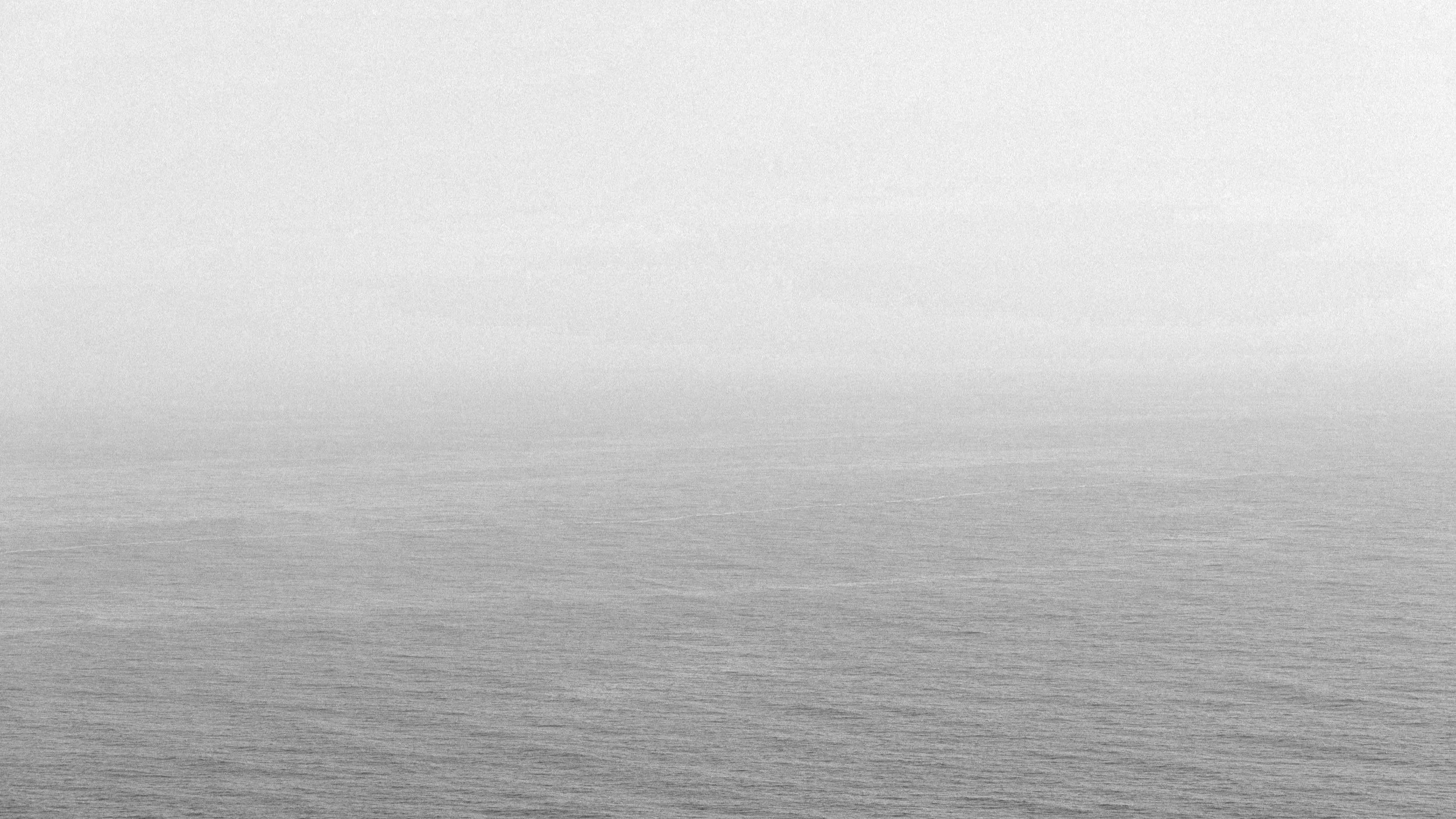
Photograph by Scott Ordway (California, 2024)
Evening Land (2025–2026)
Various voice types, piano / 30 minutes
PREMIERE
Commissioned by Stanford University Department of Music
PROJECT NOTE
Evening Land is a yearlong creative exploration of songwriting and vocal music, with a thematic focus on landscape, community, and culture in California and the wider American West.
The project includes three intensive residencies with visiting composer Scott Ordway (Head of Composition, Rutgers University), including one-on-one coaching, group workshops, and public talks. Student composers and vocalists will collaborate to create and premiere original vocal works inspired by shared reading and ongoing conversation about the themes of California landscape and culture—interpreted broadly to include both human and non-human environments.
The project culminates in the world premiere of a new song cycle by Scott Ordway—performed by Stanford voice students—alongside new student compositions reflecting the diverse voices and places that shape California today.
PROGRAM NOTE
For many years, I wanted to make a piece that addressed my home state of California as an interconnected system of landscapes, communities, and ideas. Its vastness in each of these respects, though, required that the piece take a personal rather than an objective or analytical perspective. California is such a sprawling and varied thing—physically, culturally, socially—that any attempt to speak to it all, or to speak on its behalf, is destined to fail.
But my lifelong connection to California, and in particular to its landscapes, remains a profound source of inspiration, joy, and continuity in my life. In this work and others, I hope to honor this connection and to share with others those aspects of California life that have shaped me and my family since the 1840s.
Commissioned and premiered by the Stanford University Department of Music, Evening Land is a cycle of eight songs drawn from texts by writers and figures closely associated with Northern California, alongside my own original words. Although written for different voice types, they form a continuous work, unfolding within a single, shared musical landscape. No voice stands alone, and no perspective claims authority.
California writing has long been prone to cliché, particularly in its treatment of landscape and identity. In adapting and setting each text, I repeatedly asked what the most obvious musical response might be and then sought to move away from it, toward something quieter, flatter, or more oblique. My aim is not negation, but restraint; I resist reverence and spectacle in favor of sustained listening. The work is unmistakably marked by my love for this region, but that love is expressed through attention rather than ecstatic praise. It takes the form of patience, concentration, and care rather than mythmaking.
Throughout the cycle, landscape is treated neither as metaphor nor as moral teacher. The natural world does not console, instruct, or redeem; it is indifferent to us. In texts drawn from John Steinbeck, Kenneth Rexroth, and others, the land appears as a condition within which human experience unfolds, rather than a symbol that explains it. As Steinbeck writes, “During the dry years, we forgot about the rich years / During the wet years, we forgot about the dry years / It was always that way.” He encapsulates both the cyclic nature of ecological time and the human inability to fully attend to it.
Other movements return to this non-linear sense of time. In “Dreamland,” Rexroth’s observation that “the green spring comes in November with the first rains” quietly unsettles non-Californian expectations of seasonality and renewal. In “Redwood,” which is based on my upbringing in the Santa Cruz Mountains, fragmented, crepuscular light recurs without direction or hierarchy. These songs resist developmental narratives in favor of repetition and persistence.
The cycle also addresses questions of justice, labor, and collective life. The “Farm” and “Refuge” movements draw on the words of Dolores Huerta and Harvey Milk, respectively, alongside excerpts from California’s Water Code. Their juxtaposition highlights the tension between legal abstraction and lived reality. Huerta’s insistence, “We are here and we are not alone,” stands beside the claim that “All water in the State is the property of the people, but the right to use it may be acquired by law”, underscoring the gap between rights declared and rights exercised. Hope, in these movements, is not sentiment but political necessity. It is social, collective, and fragile. As Milk recalls, even the strongest people “needed hope.”
“Table” offers a quieter articulation of political life through hospitality, mentorship, and shared labor. Drawing on the words of Alice Waters and David Tanis, it presents the table as a site of generational transmission and belonging. “It was all I wanted,” Waters recalls of a simple meal. The statement is modest, but its implications are expansive. Care, attention, and generosity are shown to shape lives over time.
Musically, the songs are intentionally restrained. They are quiet and still, and I try never to shout. The piano does not function as a traditional accompanist, illustrating or responding to the voice. Instead, it establishes material conditions of climate, terrain, and continuity within which the human voice appears. In this regard, I sought to avoid many of the expressive habits of the Romantic art song tradition, looking instead to minimalist, pop, and post-classical approaches to the piano, where repetition and surface clarity allow subtle variation to become audible over time. Much of the music unfolds through micro-variation, maintaining a surface that feels constant while changing continuously beneath it.
More than anything, Evening Land is an ethical and poetic act of witness. It does not offer solutions or arguments but instead invites the listener into a deeper awareness of California’s interwoven moral landscape of land, labor, memory, and care.
It was difficult to create a work emerging from my deep and irrational love for a place without veering into sentimentality or cliché. In the end, I found that this love may be most truthful when it refuses authority over what it observes, and that responsibility begins not with action, but with listening. In this sense,Evening Landis my gesture of gratitude and moral attention, shaped by voices that reveal California not as an abstraction or postcard ideal, but as a layered inheritance that is natural, political, historical, and human.